Effective camera movement transcends mere technical execution; it serves as a critical storytelling tool, shaping audience perception and emotional engagement. Deciding when, why, and how to move the camera requires a deliberate approach, balancing technical feasibility with narrative intent. Unmotivated or poorly executed movement can distract, while purposeful motion can guide the viewer, establish space, and heighten dramatic tension. The goal is to integrate camera movement seamlessly into the visual language of a project, ensuring each choice reinforces the story rather than detracting from it. For a comprehensive understanding of how to implement these techniques effectively, consider exploring a beginner's guide to camera movement.
Understanding Core Camera Movements
The foundation of dynamic visual storytelling often relies on a precise understanding and application of various camera movements. Each type offers distinct narrative and aesthetic possibilities, demanding careful consideration for its impact on the final visual output.
Rotational Movements: Pans and Tilts
Pan: A horizontal rotation of the camera from a fixed axis, typically a tripod. Pans are effective for revealing new information within a scene, following a subject's lateral movement, or establishing a wide landscape. The speed of the pan dictates the audience's pace of discovery or the intensity of the action. A slow pan can build suspense or emphasize scale, while a fast pan might convey urgency or disorientation. To see how these principles are applied in practice, you can find numerous examples of effective camera movement in various films and videos.
Tilt: A vertical rotation of the camera from a fixed axis. Tilts are employed to reveal vertical elements, such as a tall building or a character's full height, or to draw attention upwards or downwards within a frame. Similar to pans, the speed and direction of a tilt directly influence the viewer's interpretation of the presented information.
Translational Movements: Dollies, Tracks, and Sliders
Translational movements involve physically moving the camera through space, offering a more immersive and dynamic perspective than rotational shifts. These movements often require specialized equipment to ensure smoothness and precision.
- Dolly Shot: The camera moves on a wheeled platform (dolly) along a track or smooth surface. Dolly shots are invaluable for following characters, entering or exiting a scene, or creating a sense of forward momentum or retreat. A forward dolly can emphasize a character's determination, while a backward dolly might convey isolation or a widening perspective.
- Track Shot: Often used interchangeably with dolly, a track shot specifically implies movement along a laid track, ensuring perfectly smooth and repeatable motion. This is crucial for complex blocking or visual effects integration.
- Slider Shot: A scaled-down version of a track shot, typically used for shorter, more subtle lateral or forward/backward movements. Sliders are popular for interviews, product shots, or adding a gentle sense of depth to a static scene without the footprint of a full dolly.
Elevated and Free-Moving Shots: Cranes, Jibs, and Gimbals
These movements expand the camera's ability to move vertically, in arcs, or with greater freedom, often creating a sense of grandeur or intimacy.
Crane/Jib Shot: The camera is mounted on a crane or jib arm, allowing for sweeping vertical and arc movements. Cranes are used to establish locations from a high vantage point, transition between different levels of a scene, or create dramatic reveals. The smooth, often majestic motion can elevate the production value and convey significant shifts in narrative focus.
Handheld: The camera is held directly by the operator, resulting in a more organic, often less stable, visual style. Handheld shots can convey immediacy, urgency, or a character's subjective experience. While often associated with documentary or action sequences, deliberate handheld use can also create intimacy or discomfort, depending on the context.
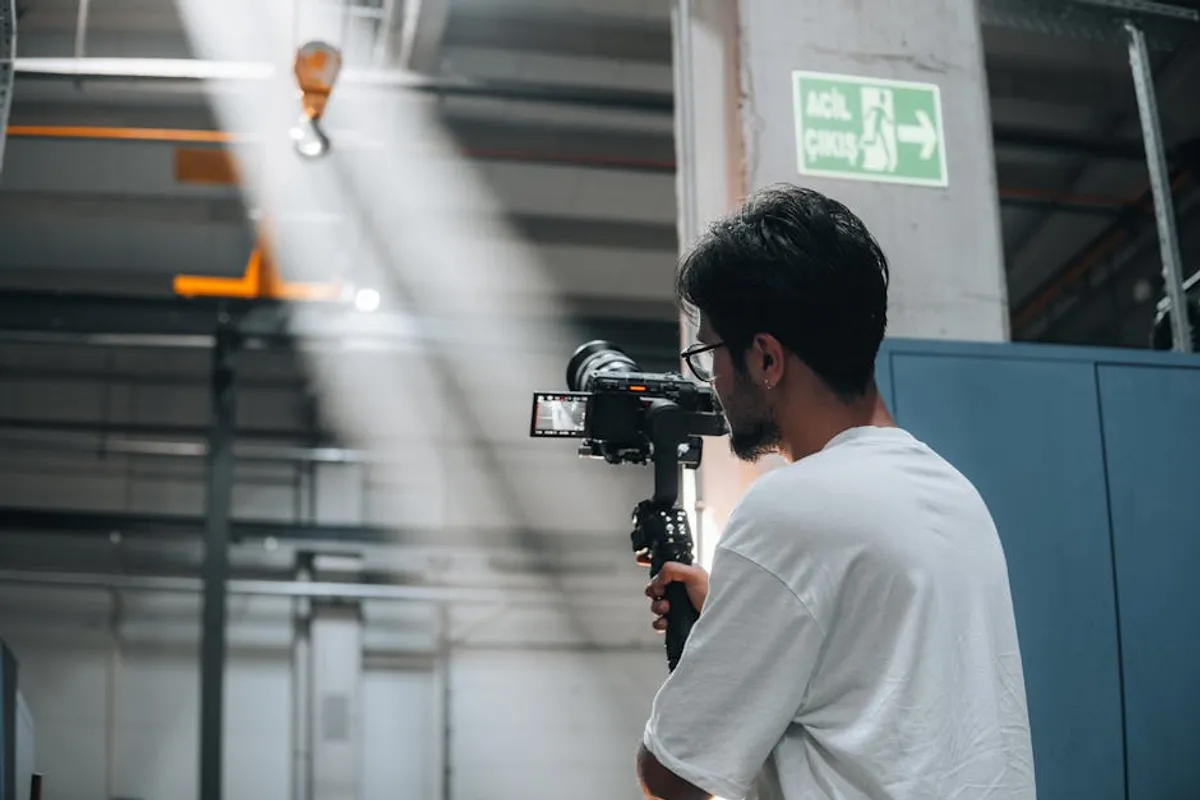
Gimbal/Steadicam: These systems stabilize the camera, allowing for fluid, floating movements even when the operator is walking, running, or navigating complex terrain. Gimbals and Steadicams provide the fluidity of a handheld shot without the distracting shakiness, ideal for following characters through dynamic environments or creating long, uninterrupted takes.
Pro Tip: Avoid unmotivated camera movement. Every pan, tilt, or dolly should serve a specific narrative purpose—to reveal information, emphasize emotion, or guide the viewer's attention. If a shot works equally well static, resist the urge to move the camera simply for the sake of movement, as it can distract from the core message.
Integrating Movement for Narrative Impact
Beyond the technical execution, the true power of camera movement lies in its ability to enhance storytelling. A well-chosen movement can communicate non-verbally, reinforcing themes, character states, and plot developments.
A slow zoom into a character's face can emphasize their internal conflict, while a rapid dolly-in might signify a sudden realization or escalating tension. Establishing shots often benefit from slow pans or crane shots to introduce the environment comprehensively. Conversely, a tight, handheld follow shot can immerse the audience in a character's immediate experience, fostering empathy or a sense of urgency. The deliberate choice of movement type, speed, and direction becomes an integral part of the narrative structure, guiding the audience's emotional and intellectual journey through the visual content.
Optimizing Camera Movement Execution
Achieving professional-grade camera movement demands attention to detail during planning and execution. Pre-visualization, whether through storyboards or blocking rehearsals, helps define the exact path, speed, and timing of each movement. For complex shots, multiple takes and adjustments are often necessary to achieve the desired fluidity and precision.
Equipment choice is paramount. A high-quality fluid head on a tripod is essential for smooth pans and tilts. For translational movements, a well-maintained dolly and track system or a stable slider provides the necessary foundation. Gimbals and Steadicams require practice to master, but their stabilization capabilities are unmatched for dynamic, operator-driven shots. Always ensure all equipment is level, balanced, and securely set up to prevent unwanted wobbles or jerks in the final footage.
Strategic Implementation
Successful camera movement is not about showcasing technical prowess, but about strategic implementation that serves the story. Before initiating any movement, ask: What is this movement communicating? Does it reveal new information? Does it enhance the mood? Does it follow the action logically? By answering these questions, creators can ensure that every camera movement is a deliberate choice, contributing meaningfully to the overall visual narrative.
Frequently Asked Questions
When should I use a handheld camera versus a gimbal?
Use a handheld camera when you want to convey a sense of immediacy, urgency, or a character's subjective, often unstable, point of view. Use a gimbal or Steadicam when you need smooth, fluid motion that follows action or characters without the inherent shakiness of handheld, creating a more polished and controlled feel.
What is the difference between a dolly shot and a zoom?
A dolly shot involves physically moving the camera closer to or further from the subject, changing the perspective and spatial relationships within the frame. A zoom involves adjusting the lens's focal length from a static camera position, which magnifies or de-magnifies the subject without altering perspective or spatial relationships.
How can I make my camera movements smoother?
To achieve smoother movements, use appropriate and well-maintained equipment (fluid head tripods, dollies, gimbals). Practice the movement multiple times without recording, paying attention to consistent speed and precise starts/stops. Additionally, ensure your camera is properly balanced on any stabilization equipment, and practice deep breathing to minimize operator-induced jitters.
Should every scene have camera movement?
No, not every scene requires camera movement. Static shots can be incredibly powerful for emphasizing stillness, isolation, or allowing the audience to absorb information without distraction. The decision to move the camera should always be motivated by narrative purpose, not simply to avoid static imagery.