
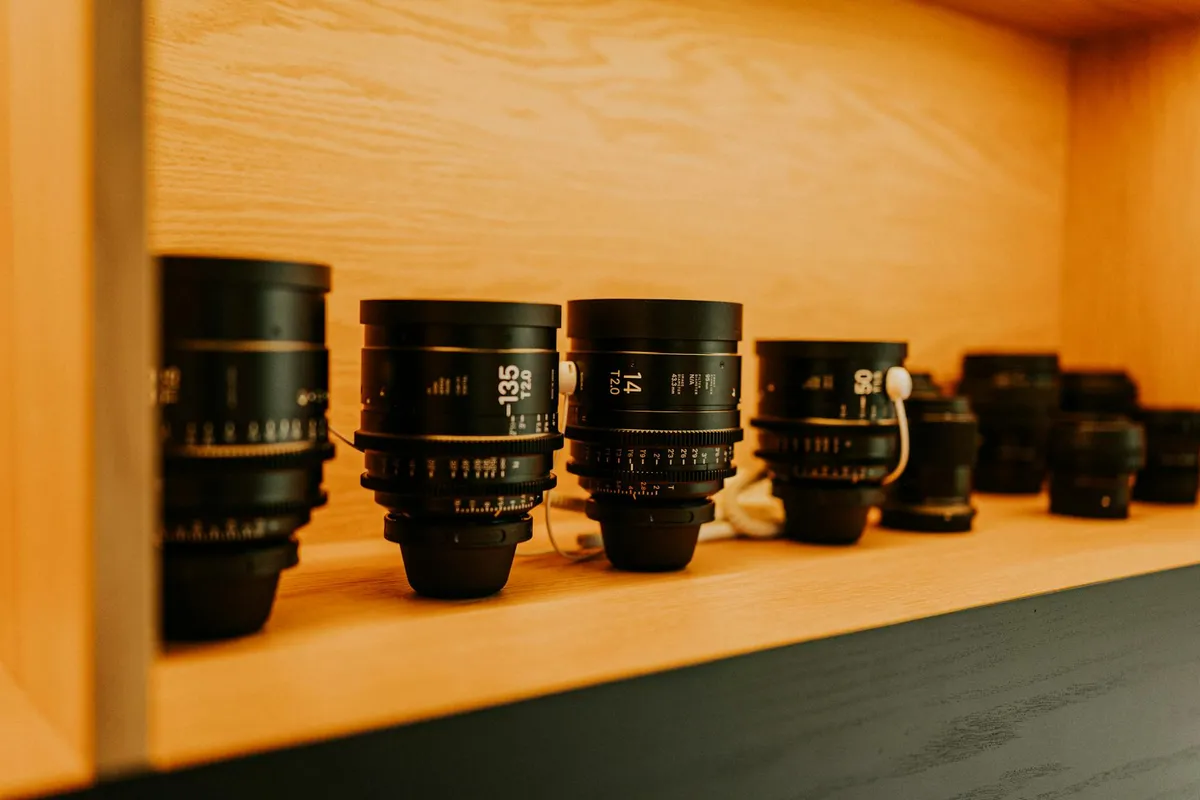
Cinema lens choice affects the look of the finished work more than camera choice for most productions. The lenses produce the texture, the rendering of skin, the falloff at the focal plane, the specific feel of the image. Camera choice matters; lens choice matters more.
I've worked with most major rental houses across thirteen years and shot with substantially more lens sets than I can count. Eight sets actually justify their rental cost across a meaningful range of project types. Here they are with the trade-offs explicitly named.
1. ARRI Signature Primes
The current gold standard for full-frame narrative work. Aluminum housings, beautiful rendering, fast.
What they're great for: High-end narrative, especially with ALEXA. Modern look that ages well. Skin tones particularly.
What they're not for: Productions that want vintage character. Productions that can't afford the rental.
Why they justify the cost: The rendering is genuinely distinctive. The set covers wide focal range. Build quality means consistent performance across long shoots.
Approximate rental: $1,500-2,500/day for full set.
2. Cooke S7/i Full Frame
Cooke's full-frame primes. The Cooke look in full-frame format.
What they're great for: Productions wanting the classic Cooke skin rendering, dialog-heavy narrative, anything where faces are the subject.
What they're not for: Productions wanting maximum sharpness or modern clinical look.
Why they justify the cost: The Cooke skin tone rendering is genuinely different from anything else. For dialog-driven productions, this difference is substantial.
Approximate rental: $1,200-2,000/day.
3. Zeiss Supreme Primes
Zeiss's modern full-frame primes. Sharp, clinical, fast.
What they're great for: Commercial work, productions wanting modern clean look, productions integrating with VFX.
What they're not for: Productions wanting vintage character or substantial lens-driven texture.
Why they justify the cost: Best modern Zeiss rendering at high build quality. Set covers the focal range thoroughly.
Approximate rental: $1,000-1,800/day.
4. Vintage Cooke Speed Panchros (rehoused)
Original 1920s-30s Cooke optics in modern housings. The rehouse work makes them practical for current productions.
What they're great for: Productions wanting genuinely vintage character. Period work. Stories where the lens is part of the storytelling.
What they're not for: Productions wanting clinical sharpness. Fast-paced work where the slower workflow with vintage optics costs time.
Why they justify the cost: The optical character is irreplaceable. Modern lenses can't produce what these optics produce. For specific looks, they're the only option.
Approximate rental: $2,000-3,500/day depending on rehouse and condition.
5. ARRI/Zeiss Master Primes
The previous-generation high-end ARRI/Zeiss collaboration. Still excellent.
What they're great for: Productions wanting high-end rendering at lower cost than Signature Primes. Established work that doesn't need the latest options.
What they're not for: Productions specifically wanting the Signature Prime rendering or full-frame coverage.
Why they justify the cost: Excellent build, excellent rendering, available at substantially lower cost than current flagship options.
Approximate rental: $800-1,400/day.
6. Atlas Orion Anamorphics
Modern anamorphic primes at price points that previously required substantial compromise.
What they're great for: Anamorphic looks at independent budget levels. Music videos. Indie features.
What they're not for: High-end productions where Hawk or Panavision anamorphic is the standard.
Why they justify the cost: Real anamorphic character at price points that enable anamorphic work on productions that couldn't otherwise afford it.
Approximate rental: $400-700/day.
7. Hawk V-Lite Anamorphics
Mid-tier anamorphic option. Genuine anamorphic character. Practical workflow.
What they're great for: Mid-budget narrative productions wanting anamorphic. Productions where pure look matters more than the prestige of Hawk Class X or Panavision G-series.
What they're not for: Top-tier productions where pedigree matters.
Why they justify the cost: Real anamorphic at workable rental costs. Substantially better optical quality than budget anamorphic options.
Approximate rental: $1,500-2,500/day.
8. Panavision Sphero/Primo Primes
Panavision's spherical primes. Consistent across the set. Substantial heritage.
What they're great for: Productions working in the Panavision system. Narrative productions wanting Panavision rendering.
What they're not for: Productions outside the Panavision rental ecosystem (lenses are typically only available through Panavision).
Why they justify the cost: Specific Panavision character. Consistent set behavior. Strong rental house support.
Approximate rental: Bundled with broader Panavision rental packages.
What didn't make the list
Lens sets I've worked with that don't make the cut:
Various Sigma cinema lines. Adequate but not differentiated enough to choose over alternatives at similar price points.
Older Cooke S4/i. Excellent but the S7 has substantially replaced their use case at most rental houses.
Various rehoused Russian lenses. Specific looks but inconsistent build and unpredictable optical performance.
Various consumer-mount cinema lenses. Capable but limited workflow integration on professional productions.
Tribe7 Blackwing primes. Distinctive look but limited use cases compared with the more versatile sets above.
How I actually pick
The decision tree I use on productions:
If high-end narrative budget allows: Signature Primes or Master Primes depending on full-frame requirement.
If high-end and dialog-heavy: Cooke S7.
If clinical modern look is wanted: Supreme Primes.
If vintage character is wanted and budget allows: Rehoused Cooke Speed Panchros.
If anamorphic and budget is high: Hawk V-Lite or higher Hawk/Panavision.
If anamorphic and budget is independent-tier: Atlas Orion.
If working with Panavision: Sphero/Primo system.
If budget is below all the above: it depends on specific look priorities. Older Master Primes if available; specific budget options otherwise.
What lensing actually does
The lens does specific things to the image:
Focal plane behavior. How sharp the focus plane is and how the falloff happens.
Bokeh character. How the out-of-focus areas render.
Color rendering. The specific tint and saturation patterns lenses produce.
Contrast behavior. How shadow and highlight transitions render.
Specific aberrations. The "flaws" that produce distinctive character (light wrap, lens flares, geometric distortion patterns).
Veiling glare and contrast performance against direct light.
These elements together produce what we call "the lens look." Different lens sets produce substantially different looks even on identical cameras.
What lensing doesn't fix
Things lenses won't solve:
Bad lighting. The most expensive lens won't make poorly lit footage look good.
Bad camera placement. Lens character can't fix poor compositions.
Bad performance direction. Lens choice won't rescue weak performances.
Bad story. Beautiful lensing on a weak story produces beautiful boring footage.
Lens choice is one variable. Other variables matter more for whether work is good. Lens choice matters substantially when other variables are functioning.
The honest takeaway
For most productions in 2026, the lens set choice should follow specific look priorities and budget constraints rather than chasing prestige.
The eight sets above are all capable of supporting world-class work. Which one is right depends on the specific project.
If you're considering specific lens choices for a project, the conversation benefits from project-specific consideration. The aggregate recommendations here are starting frameworks rather than universal answers.
Otherwise: pick lenses that serve the story, prep adequately to know how they actually behave, and use them in service of what you're trying to make.
That's how lensing actually works in production.



