
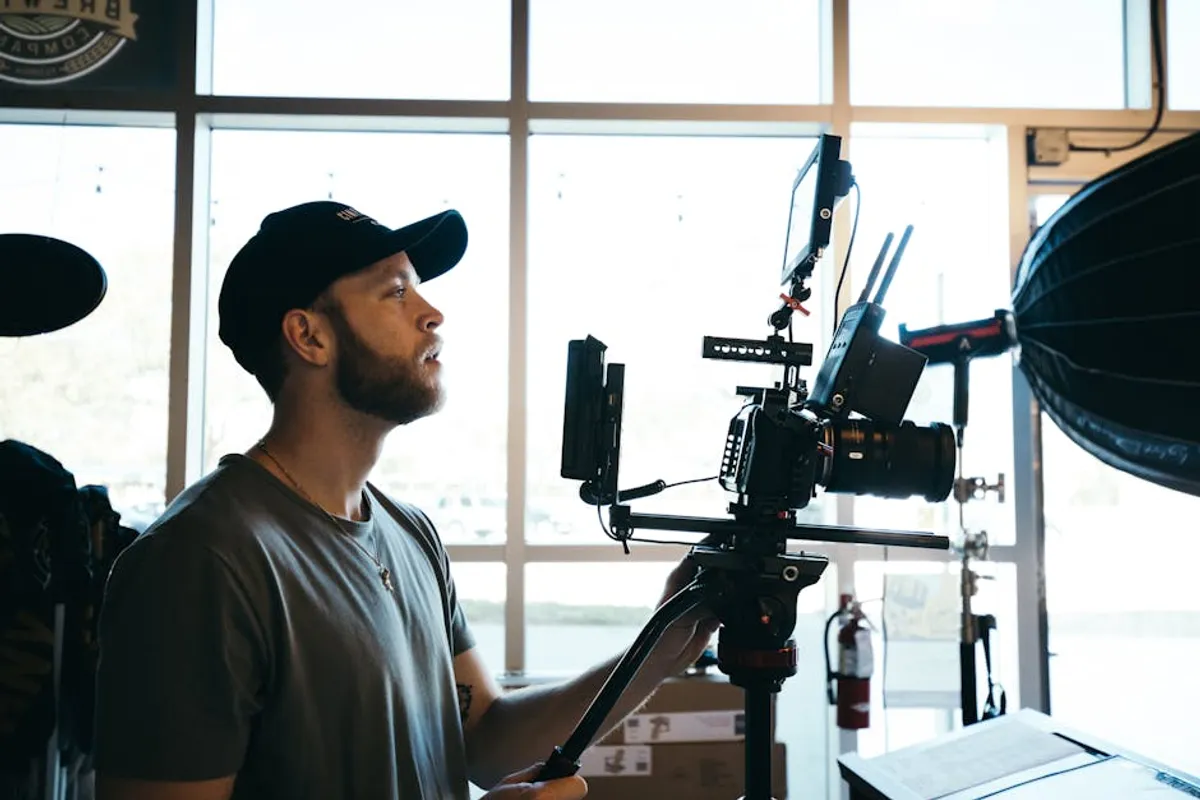
Effective cinematography transcends mere technical skill; it is the deliberate application of visual principles to tell a story, evoke emotion, and guide audience perception. For any project, from commercial advertisements to independent films, mastering cinematography best practices directly impacts the production's commercial viability and its ability to connect with viewers. This involves a strategic approach to image creation, ensuring every frame serves a clear narrative or persuasive purpose, rather than simply recording an event. Mastering these tips for better cinematography elevates the production's commercial viability.
Establishing the Visual Foundation: Core Principles
The bedrock of compelling cinematography lies in a few fundamental principles that, when understood and applied consistently, elevate the visual quality of any production.
Intentional Composition
Composition dictates how elements within the frame are arranged, influencing where the viewer's eye goes and what they interpret. The Rule of Thirds, while a common starting point, is just one tool. Consider leading lines to draw attention, negative space to create mood or focus, and natural framing (e.g., doorways, windows) to add depth and context. A well-composed shot feels balanced, purposeful, and often conveys information without dialogue. For commercial work, this means ensuring product placement or key messaging is always within a visually advantageous position.
Strategic Lighting Design
Lighting is not just about visibility; it's about shaping mood, revealing texture, and creating depth. Three-point lighting (key, fill, and back light) provides a standard foundation, but its application varies wildly based on desired effect. Hard light generates sharp shadows and high contrast, often used for dramatic or intense scenes. Soft light, diffused and even, creates a gentler, more flattering look. Understanding how light interacts with subjects and environments allows cinematographers to sculpt visual narratives, from the starkness of a film noir to the warmth of a family commercial.
Purposeful Camera Movement
Every camera movement should serve the narrative. A smooth dolly shot might reveal a character's isolation or journey, while a quick handheld pan can convey urgency or chaos. Panning follows action horizontally, tilting vertically. Tracking shots move with the subject, maintaining a consistent distance. Steadicam or gimbal shots offer fluid, immersive perspectives. Avoid gratuitous movement; if a shot doesn't need to move, it shouldn't. Unnecessary movement distracts from the subject and can diminish a production's perceived quality.
Precise Exposure and White Balance
Technical precision in exposure and white balance is non-negotiable for a professional look. Correct exposure ensures details are preserved in both highlights and shadows, preventing crushed blacks or blown-out whites. White balance ensures colors are rendered accurately, preventing unnatural color casts. Inconsistent white balance across takes or scenes breaks immersion and signals amateur production. Modern cameras offer tools like zebras, false color, and histograms to achieve this accuracy, requiring constant monitoring during a shoot.
Lens Selection for Emotional Impact
The choice of lens focal length profoundly impacts perspective and the emotional resonance of a shot. Wide-angle lenses (e.g., 16-35mm) exaggerate perspective, making spaces feel larger and often creating a sense of grandeur or distortion. Normal lenses (e.g., 50mm on full-frame) approximate human vision, offering a natural, immersive feel. Telephoto lenses (e.g., 85mm and up) compress perspective, making backgrounds appear closer to the subject, often used for intimate close-ups or to isolate subjects from busy environments. Each choice subtly guides the audience's emotional connection to the scene.
Pre-Production and On-Set Execution
Effective cinematography is heavily reliant on thorough planning and disciplined execution.
Detailed Pre-Visualization
Before any camera is turned on, pre-visualization tools like storyboards and shot lists are crucial. Storyboards illustrate key frames, camera angles, and movements, providing a visual blueprint. Shot lists detail every shot needed, including focal length, camera position, movement, and any specific lighting requirements. This planning streamlines the shooting process, ensures comprehensive coverage, and allows the director and cinematographer to align on the visual strategy. Location scouting is also critical to understand available light, power, and logistical challenges.
Collaborative On-Set Workflow
On set, clear communication between the cinematographer, director, gaffer (lighting chief), and key grip (rigging chief) is paramount. The cinematographer translates the director's vision into technical execution, guiding camera and lighting departments. Constant monitoring of monitors for exposure, focus, and composition ensures consistency. Problem-solving on the fly, adapting to changing light or logistical hurdles, is a daily reality that requires experience and a calm demeanor.
Pro Tip: Always shoot test footage at your chosen location with your actual gear under anticipated lighting conditions. This reveals unforeseen issues with reflections, color shifts, or exposure challenges before the main shoot, saving significant time and resources.
Post-Production Considerations
Cinematography choices made during production directly influence post-production possibilities and efficiency.
- Color Grading Latitude: Shooting in a flat color profile (e.g., Log) preserves more dynamic range, offering greater flexibility for color grading and correction in post-production.
- Editing Flow: Well-planned coverage with varied shot sizes and angles provides editors with ample material to cut a dynamic and engaging sequence. Lack of coverage often leads to difficult edits or compromises in storytelling.
- Visual Effects Integration: Understanding the requirements for visual effects (e.g., green screen, motion tracking markers) during the shoot prevents costly reshoots or compromises in VFX quality.
Sustaining Visual Excellence
Continuous refinement of cinematography skills involves critical self-assessment and staying current with evolving technologies and artistic trends. Review your work, identify areas for improvement, and experiment with new techniques. Study the visual language of successful films, commercials, and digital content, not to copy, but to understand the underlying principles at play. The goal is to develop a distinctive visual voice that consistently delivers high-quality, commercially effective imagery.
Frequently Asked Questions
What is the most crucial aspect of good cinematography?
While subjective, intentionality is arguably the most crucial aspect. Every visual decision, from framing to lighting and movement, should serve a clear narrative or emotional purpose, rather than being arbitrary.
How can I improve my cinematography without expensive gear?
Focus on mastering composition, natural light manipulation, and purposeful camera movement with the gear you have. Understanding visual storytelling principles is more impactful than acquiring the latest camera body.
What is the difference between a Director of Photography (DP) and a Cinematographer?
These terms are often used interchangeably, but "Director of Photography" is more common in the US film industry, while "Cinematographer" is prevalent in Europe and other regions. Both roles are responsible for the artistic and technical decisions related to the image.



