
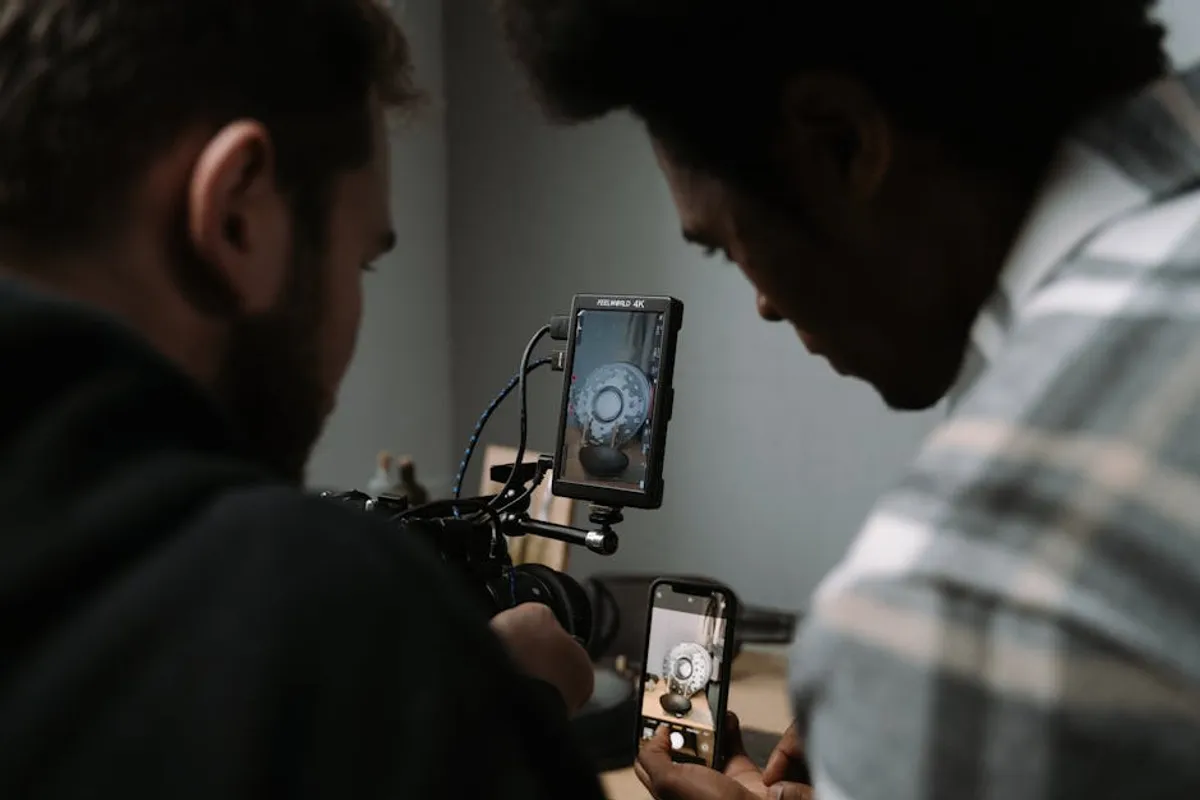
Effective film lighting transcends mere illumination; it is a critical component of visual storytelling and a powerful tool in commercial communication. For marketers, agencies, and content creators, understanding how light shapes perception, conveys emotion, and highlights product features is not just an artistic pursuit—it's a strategic imperative. Intentional lighting can elevate a video from amateur to professional, directly influencing audience engagement, brand perception, and ultimately, conversion rates. This guide breaks down the core principles and practical applications of film lighting, demonstrating how deliberate choices can enhance the commercial impact of your visual assets. This guide breaks down the core principles and practical applications of film lighting to help you succeed.
Fundamental Principles of Film Lighting
Mastering film lighting begins with understanding its foundational elements. These principles dictate how light interacts with subjects and environments, shaping the final image and its emotional resonance.
The Three-Point Lighting System
The three-point lighting system is the cornerstone of most professional setups, offering a balanced and natural illumination that defines a subject's form and separates it from the background. Its commercial utility lies in its ability to present products or spokespeople clearly and appealingly.
- Key Light: This is the primary and strongest light source, positioned to one side of the camera and subject. It defines the subject's main features and casts dominant shadows.
Commercial application: For product photography or video, the key light sculpts the product, highlighting its contours and primary selling points, making it visually appealing and tangible.
- Fill Light: Placed on the opposite side of the camera from the key light, the fill light is softer and less intense. Its purpose is to soften or eliminate the harsh shadows created by the key light, reducing contrast and revealing detail in darker areas.
Commercial application: In interviews or corporate videos, a well-placed fill light ensures the subject's face is evenly lit, appearing approachable and professional, without distracting harsh shadows under the eyes or chin.
- Back Light (or Hair Light/Rim Light): Positioned behind the subject, often slightly above, the back light creates a subtle rim of light around the subject's edges. This separates the subject from the background, adding depth and dimension.
Commercial application: This technique makes a subject or product "pop" off the screen, enhancing visual separation and creating a more dynamic, high-production-value aesthetic crucial for premium brand messaging.
Manipulating Light Quality: Hard vs. Soft
The quality of light—whether hard or soft—profoundly affects the mood and detail of an image. This choice is critical for aligning visual aesthetics with commercial objectives.
- Hard Light: Produced by small, intense light sources (e.g., direct sunlight, bare bulb), hard light creates sharp, well-defined shadows and high contrast.
Commercial application: Often used to convey drama, power, or grittiness. For certain product shots, it can emphasize texture and sharp edges, such as in industrial equipment or high-tech devices, communicating precision and robustness.
- Soft Light: Generated by larger light sources or through diffusion (e.g., overcast sky, light through a large softbox), soft light produces gradual transitions between light and shadow, with less defined edges.
Commercial application: Ideal for creating a flattering, gentle, or luxurious feel. It's preferred for beauty product advertising, interviews, and any scenario where a smooth, inviting, or aspirational look is desired, as it minimizes imperfections and creates a more aesthetically pleasing image.
Directing Light for Impact
The direction from which light strikes a subject dramatically alters its appearance, influencing perceived shape, texture, and emotional tone. Strategic light placement is key to guiding the viewer's eye and reinforcing commercial messages.
- Frontal Lighting: Light source directly in front of the subject. Flattens features, reduces shadows.
Commercial application: Useful for product shots requiring minimal shadows to show every detail clearly, or for identity shots where facial recognition is paramount.
- Side Lighting: Light source from the side. Emphasizes texture and creates strong shadows, revealing contours.
Commercial application: Excellent for accentuating the form and texture of products, such as the grain of wood furniture or the intricate details of jewelry, adding depth and realism.
- Top Lighting: Light source directly above. Creates shadows under eyes and chin, can be dramatic.
Commercial application: Can be used for artistic or dramatic effect, or to highlight specific features from above, like the sheen on a car's hood.
- Bottom Lighting: Light source from below. Often creates an unsettling or unnatural effect.
Commercial application: Rarely used in commercial contexts unless aiming for a specific, often eerie or unconventional, artistic statement.
Color Temperature and Mood
Color temperature, measured in Kelvin (K), describes the warmth or coolness of light. This is a powerful, often subconscious, tool for influencing mood and association.
- Warm Light (lower K values, e.g., 2700K-3200K): Appears orange or yellow, similar to candlelight or incandescent bulbs.
Commercial application: Evokes feelings of comfort, intimacy, nostalgia, or luxury. Ideal for food advertising (making dishes appear more appetizing), hospitality marketing, or promoting cozy home products.
- Cool Light (higher K values, e.g., 5000K-6500K): Appears blue or white, similar to daylight or fluorescent office lighting.
Commercial application: Conveys professionalism, cleanliness, modernity, or efficiency. Often used for corporate videos, tech product launches, or medical advertisements to suggest precision and reliability.
Essential Lighting Instruments and Their Applications
Selecting the right lighting instruments is crucial for achieving desired effects and managing production logistics. Each type offers distinct advantages for commercial video production.
Tungsten Lights: Warmth and Tradition
Tungsten lights, or "hot lights," use an incandescent bulb to produce a continuous, warm-toned light (typically around 3200K). They are robust and cost-effective for their output.
Commercial application: Valued for their consistent color and natural warmth, tungsten lights are excellent for creating inviting interior scenes, product shots requiring a rich, traditional aesthetic, or interviews where a soft, flattering glow is desired. Their heat output can be a consideration in confined spaces.
HMI Lights: Daylight and Power
Hydrargyrum Medium-arc Iodide (HMI) lights are gas-discharge lamps that produce a powerful, daylight-balanced light (around 5600K). They are significantly brighter and more efficient than tungsten lights for the same wattage.
Commercial application: HMIs are indispensable for matching natural daylight, whether shooting outdoors or simulating sunlight indoors. Their high output makes them suitable for illuminating large sets, overpowering ambient light, or creating strong, directional daylight effects for high-end cinematic commercials.
LED Panels: Versatility and Control
Light Emitting Diode (LED) panels have become ubiquitous in modern production due to their energy efficiency, low heat output, and often, variable color temperature and hue control.
Commercial application: LEDs offer unparalleled versatility. Bi-color panels can switch between warm and cool light, while RGBWW panels provide full-spectrum color control. This adaptability makes them ideal for corporate videos, product demos requiring specific brand colors, and dynamic marketing content where rapid mood changes or special effects lighting are needed. Their portability and low power draw are also significant advantages for on-location shoots.
Shaping and Controlling Light
Raw light from a fixture is rarely used directly. Modifiers are essential tools for shaping, diffusing, and coloring light to achieve precise visual outcomes.
Diffusers and Reflectors
Diffusers: Materials like silks, softboxes, or diffusion gels spread and soften light, reducing harsh shadows.
Commercial application: Crucial for creating flattering light on faces for interviews or beauty products, and for reducing specular highlights on reflective surfaces like glass or polished metal, ensuring product details are visible without glare.
Reflectors: Surfaces (white, silver, gold) used to bounce and redirect light. They can fill shadows or add a subtle catchlight.
Commercial application: An economical way to add fill light, especially outdoors, or to add sparkle to eyes in portraiture, making subjects appear more vibrant and engaging in commercial content.
Flags, Grids, and Gels
Flags: Opaque panels used to block or cut light, creating precise shadow lines or preventing light spill.
Commercial application: Essential for isolating light on a specific product feature or subject, ensuring that only desired areas are illuminated and preventing light from hitting the background or other elements unintentionally.
Grids (or Eggcrates): Fabric or metal grids attached to softboxes or reflectors to control the spread of light, making it more directional.
Commercial application: Useful for creating a more focused soft light, such as highlighting a specific part of a product without affecting the entire scene, offering precise control over illumination.
Gels (or Color Filters): Translucent sheets placed over lights to change their color temperature or add specific hues.
Commercial application: Used to match different light sources (e.g., converting a tungsten light to daylight), create mood (e.g., warm sunset tones), or incorporate brand colors into the lighting design, enhancing brand identity and visual consistency.
Pro Tip: Always plan your lighting setup during pre-production. Sketching out a lighting diagram helps visualize the placement of lights and modifiers, anticipate challenges, and ensures consistent visual quality across multiple shoots or scenes. This proactive approach saves significant time and resources on set, directly impacting production efficiency and budget adherence.
Elevating Commercial Video Production with Intentional Lighting
The deliberate application of lighting principles directly impacts the effectiveness of commercial video content. Consider these applications:
- Product Demos: Use soft, diffused lighting to showcase product features without harsh shadows, often combined with a subtle back light to make the product stand out. Employ controlled specular highlights to emphasize material quality (e.g., the sheen of plastic, the texture of fabric).
- Corporate Interviews: A classic three-point setup with soft key and fill lights ensures the interviewee looks professional, approachable, and trustworthy. A well-placed back light adds depth, preventing the subject from blending into the background, which enhances perceived production value.
- Brand Storytelling: Lighting choices should align with brand identity. A luxury brand might use soft, warm, directional light to evoke elegance, while a tech brand might opt for cool, clean, and even lighting to suggest innovation and precision.
- E-commerce Video: Consistent, high-key (bright, minimal shadows) lighting for product rotations ensures clarity and accuracy, allowing customers to fully appreciate the item's details.
Mastering Your Lighting Setup
Effective lighting is not about acquiring the most expensive gear, but about understanding how light behaves and using tools strategically. Begin by experimenting with light direction and quality using minimal equipment. Observe how shadows fall, how textures are revealed, and how colors shift. Gradually introduce modifiers like diffusion and reflectors. For commercial applications, consistency is paramount. Document your lighting setups, especially for recurring shoots or product lines, to ensure a uniform brand aesthetic across all visual assets. This methodical approach elevates your content from merely being seen to being truly impactful and persuasive.
Frequently Asked Questions
What is the most crucial piece of lighting equipment for beginners?
A single dimmable LED panel with adjustable color temperature, combined with a small softbox or diffuser, offers significant versatility for learning and basic commercial setups without a large investment.
How do I make my product look more appealing with lighting?
Use soft, diffused lighting to minimize harsh shadows and reveal product details. Add a subtle back light to create separation and make the product "pop." Experiment with side lighting to emphasize texture and form.
What is the difference between color temperature and color rendering index (CRI)?
Color temperature describes the warmth or coolness of light (e.g., 3200K is warm, 5600K is cool). CRI measures how accurately a light source renders colors compared to natural light; a higher CRI (90+) indicates more accurate color representation, which is critical for product photography and brand consistency.
Can I use natural light for commercial videos?
Yes, natural light can be highly effective, especially when diffused (e.g., near a large window on an overcast day). However, it is less controllable and can change rapidly, making consistent results challenging without additional modifiers like reflectors or flags.



